Kansas Prevention Collaborative and the Kansas Department for Aging and Disability Services Problem Gambling Teams are partnering with the National Council on Problem Gambling (NCPG) to recognize March as Problem Gambling Awareness Month (PGAM). This year’s theme, “Seeking Understanding,” focuses on increasing awareness of problem gambling as a serious but often misunderstood mental health condition. The campaign seeks to foster greater awareness and empathy, break down stigma and barriers to treatment, and provide support for individuals and families impacted by gambling-related harm.
This year’s Problem Gambling Awareness Month theme of “Seeking Understanding” can be used to support Kansas ongoing efforts based on the Know When the Game is Playing You campaign, promoting player health.
An estimated 2.5 million US adults meet the criteria for severe gambling problems in a given year.
Another 5 – 8 million meet one or more of the criteria for gambling disorder and are experiencing problems due to their gambling behavior.
The NCPG estimates that the annual national social cost of problem gambling is $14 billion (this includes job loss, bankruptcy, gambling-related healthcare spending, and other consequences)
Beyond traditional gambling, problem gaming effectspeople of all ages.
Static overlay
The average age of a gaming addict is 24 years of age.
Static overlay
Around 8.5% of children and teenagers around the world may be addicted to gaming.
Static overlay
Over two billion people play video games worldwide, and the number is predicted to surpass three million by 2023.
Static overlay
3-4% of gamers are addicted to video games. In a 2021 systematic review and meta-analysis the global prevalence of gaming disorder was found to be 3.05% That means there can be as many as 60 million people (or more) suffering from gaming disorder.
Static overlay
49% of all Americans adults have played video games, but only 10% consider themselves “gamers”.
Static overlay
Between 0.3% and 1% of the general population have symptoms associated with gaming disorder.
Static overlay
The average gamer spends 6.5 hours per week playing video games.
Static overlay
1 in 10 gamers play for more than 12 hours daily.
Static overlay
15% of gamers have skipped meals to play video games.
Static overlay
25% of gamers have neglected personal hygiene to play video games.
Static overlay
22% of gamers have lost sleep because of playing video games.
Screen for potential gambling-related problems. Brief screens can help people decide whether to seek a formal evaluation of their gambling behavior. The 3-item BBGS1 is based on the American Psychiatric Association’s Diagnostic and Statistical Manual of Mental Disorders (DSM-IV) criteria for gambling disorders.
Find a link to a 4-question screen hereor a 20-question screen here.
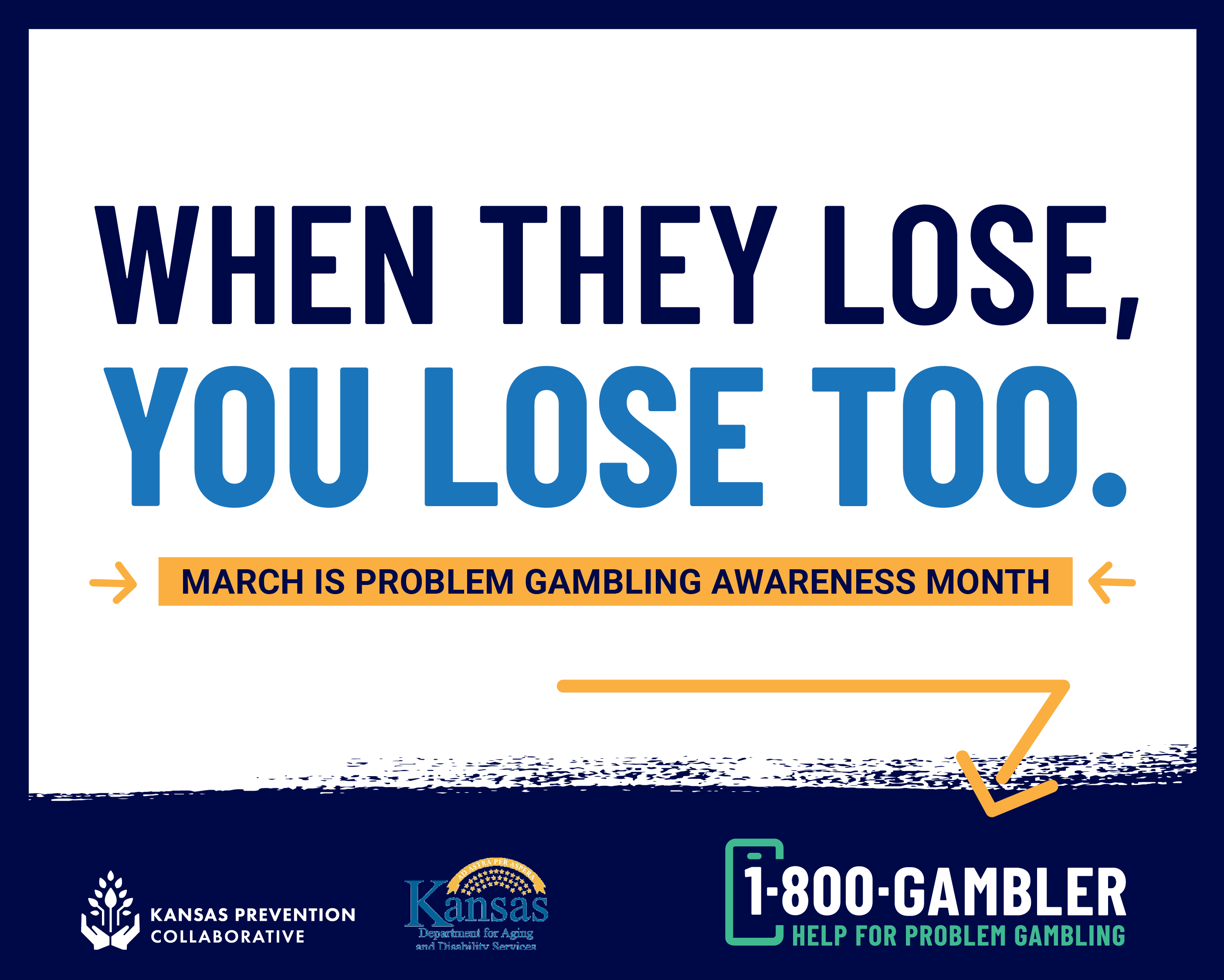
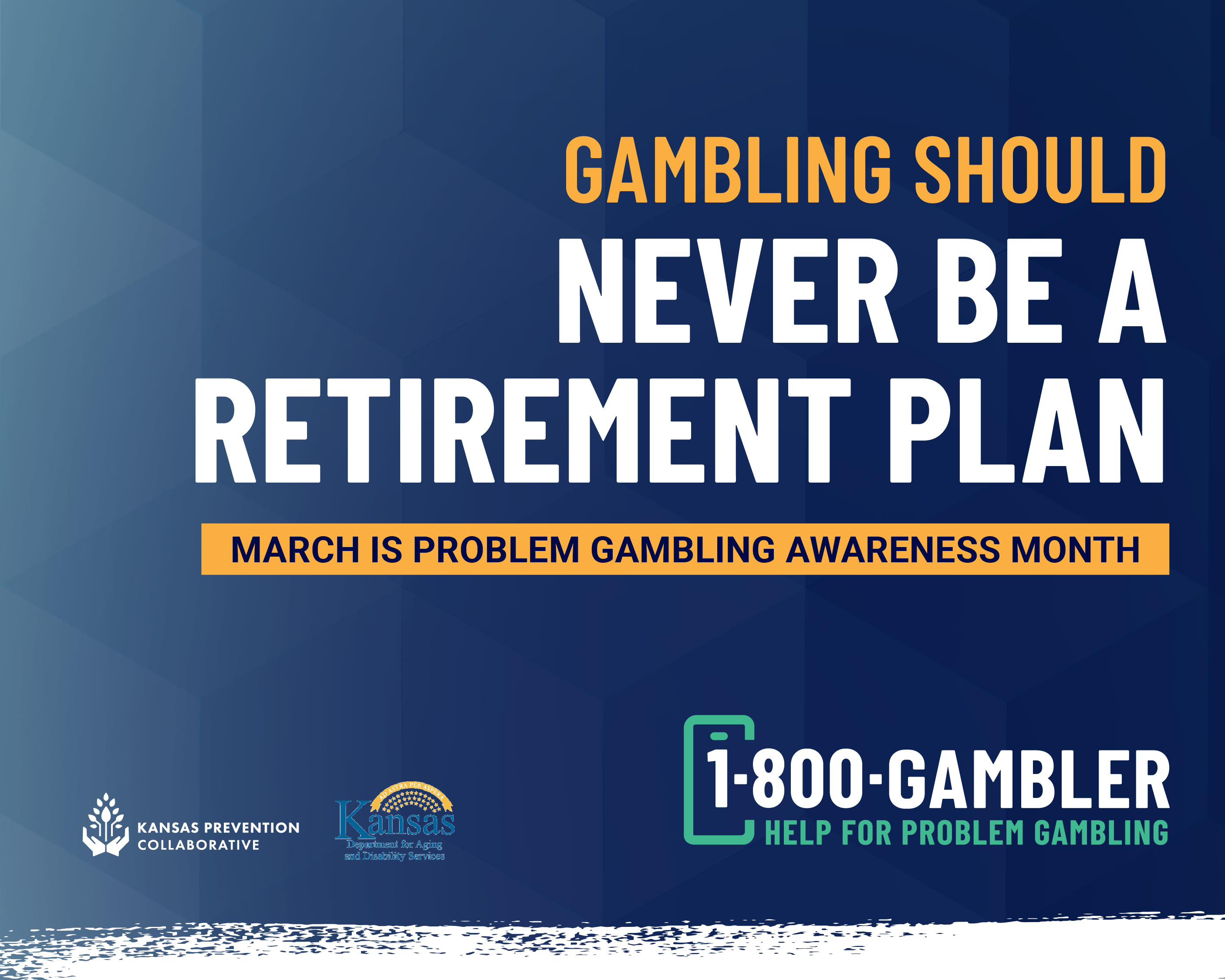
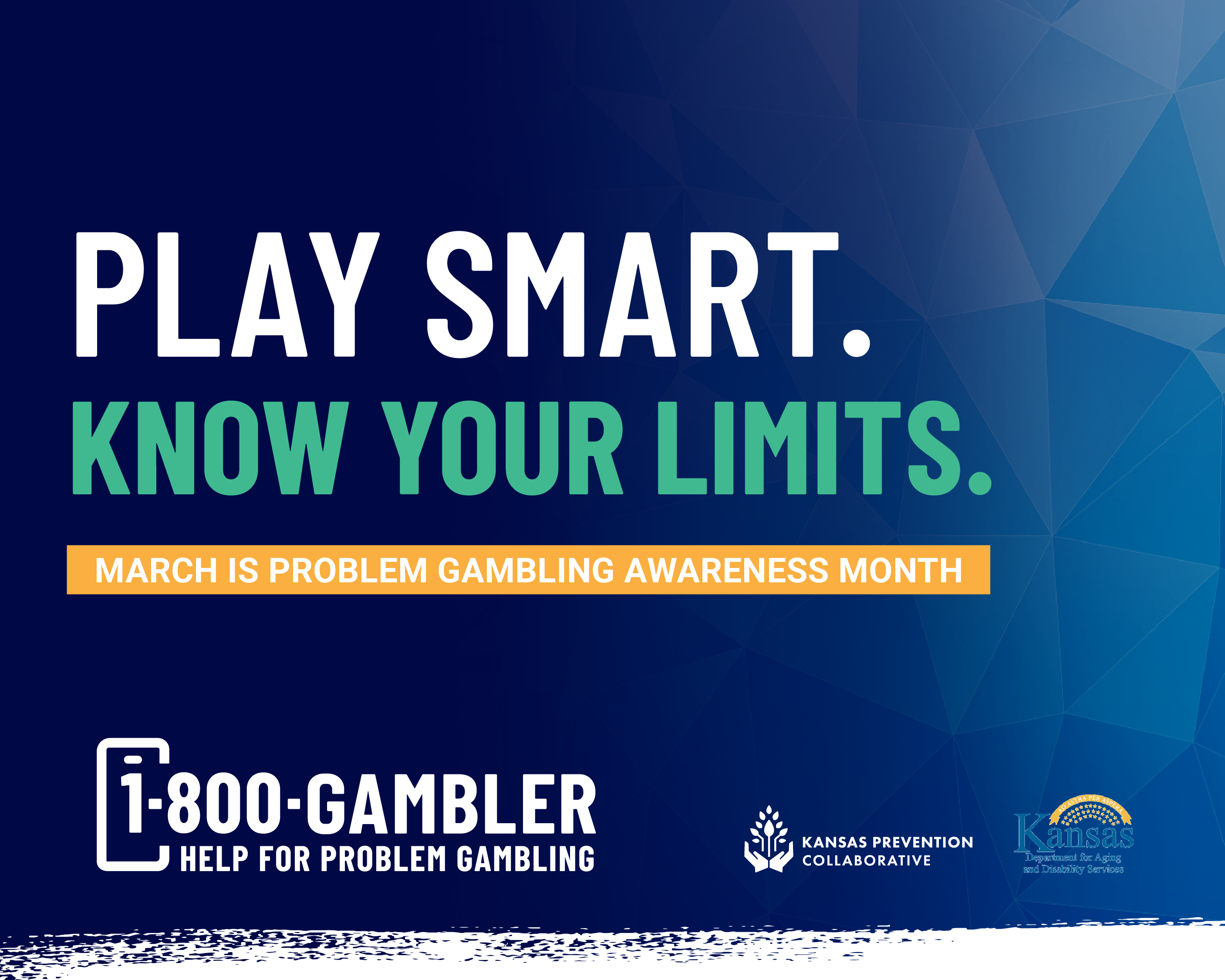
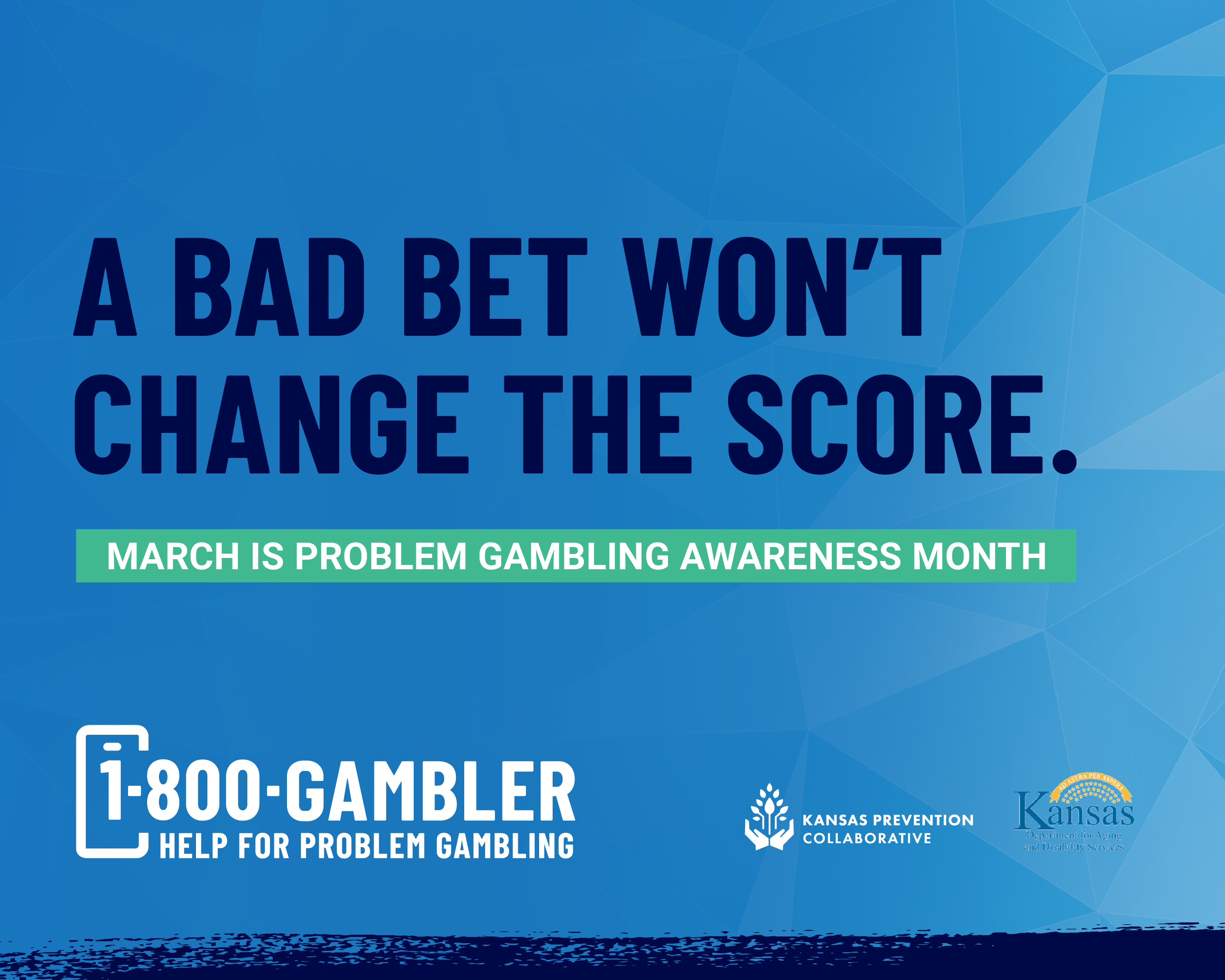
Below are some suggested captions and graphics to post on your social media for each week of March! Click on a graphic to download it individually or download them all through the button below.
Gambling should be entertainment, not a source of stress. When it starts to impact your mood, finances, or relationships, it’s time to take a step back. Know when the game is playing you. #ProblemGamblingAwarenessMonth
Gambling can be exciting, but it’s not always harmless. If it’s causing stress, anxiety, or financial strain, it might be time to reevaluate. Know when the game is playing you. #ProblemGamblingAwarenessMonth
Week 2: Impact on Others
Problem gambling doesn’t just affect the person placing the bets—it impacts family, friends, and coworkers, too. 1 in 7 Kansans are negatively affected by a loved one’s gambling. Know the signs. Know when the game is playing you. #ProblemGamblingAwarenessMonth
A gambling problem can create stress, financial strain, and emotional turmoil for more than just the gambler. If someone’s gambling is affecting your life, support is available. Don’t let the game play you. #ProblemGamblingAwarenessMonth
Week 3: Older Adults & Military Veterans
For many older adults, gambling is a social activity—but when it starts affecting finances, relationships, or mental health, the risks outweigh the rewards. Know when the game is playing you. #ProblemGamblingAwarenessMonth
Gambling can be exciting, but it’s not always harmless. If it’s causing stress, anxiety, or financial strain, it might be time to reevaluate. Know when the game is playing you. #ProblemGamblingAwarenessMonth
Week 4: Sports & Betting
Sports betting should add to the excitement, not the stress. Know the risks, set limits, and never chase losses. The smartest play is knowing when enough is enough. #ProblemGamblingAwarenessMonth
No matter how much you wager, the outcome of the game won’t change. Don’t let losses push you to bet more. Play smart, stay in control, and always make the right call when it comes to responsible gambling. #ProblemGamblingAwarenessMonth
The National Council on Problem Gambling has shared this Toolkit to raise awareness of the campaign, needs, and resources. Please see the templates for press releases, proclamations, presentations, and their PGAM Brand Assets for sharing!