Opioids are a class of drugs that include the illegal drug heroin, synthetic opioids such as fentanyl, and pain relievers available legally by prescription, such as oxycodone (OxyContin), hydrocodone (Vicodin), codeine, morphine, and many others. (National Institute on Drug Abuse).
While opioids can be a great tool when used as prescribed, they can cause devastating damage when used incorrectly.
Improper use of medications can be very dangerous. Be sure you use all medications safely and effectively.


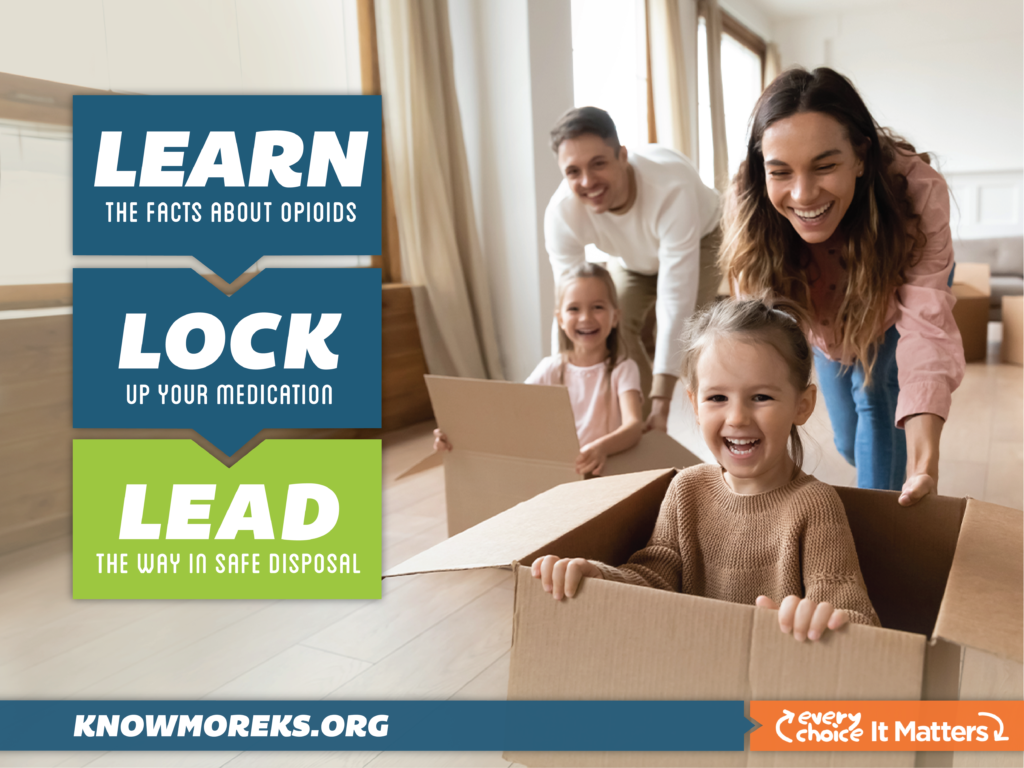
Part of creating safe living spaces is ensuring that all potentially harmful medications are kept in places that are inaccessible to children and anyone to whom they are not prescribed.
The Facts
94% of Kansas teens have never used prescription drugs not prescribed to them. (KCTC, 2023)
0.44% of Kansas teens who have used prescription drugs not prescribed for them in the past 30 days obtained them from friends or family members. (KCTC, 2022)
Opioid prescription rates decreased 12% from 2018-2022. (K-TRACS)
Opioid overdose deaths have increased 217% from 2018-2022. (K-TRACS)
Theft and abuse of prescription medication is a serious problem.
Knowing how to safely dispose of your opioids is important to ensuring that there is not a surplus of them in your home. Unfortunately, most medications cannot simply be thrown away or flushed down the toilet.
To prevent accidental or intentional ingestion of potentially dangerous medications by children, or pets, the FDA recommends properly disposing of all unused and expired medications quickly.